
Objective characterization of neural function.
Clinical neurophysiology evaluates functional characteristics of nervous-system pathways through recorded spontaneous or stimulus-evoked electrical activity. Cerebral background activity, sensory and motor responses, motor-unit physiology, neuromuscular transmission and evoked neural responses provide distinct—not interchangeable—perspectives.
The value of these data depends on an appropriate clinical question, technically sound acquisition and interpretation within the total clinical presentation. A latency, amplitude, conduction velocity, waveform morphology or response pattern should not be equated with an independent diagnosis.
Complementary electrophysiologic disciplines.
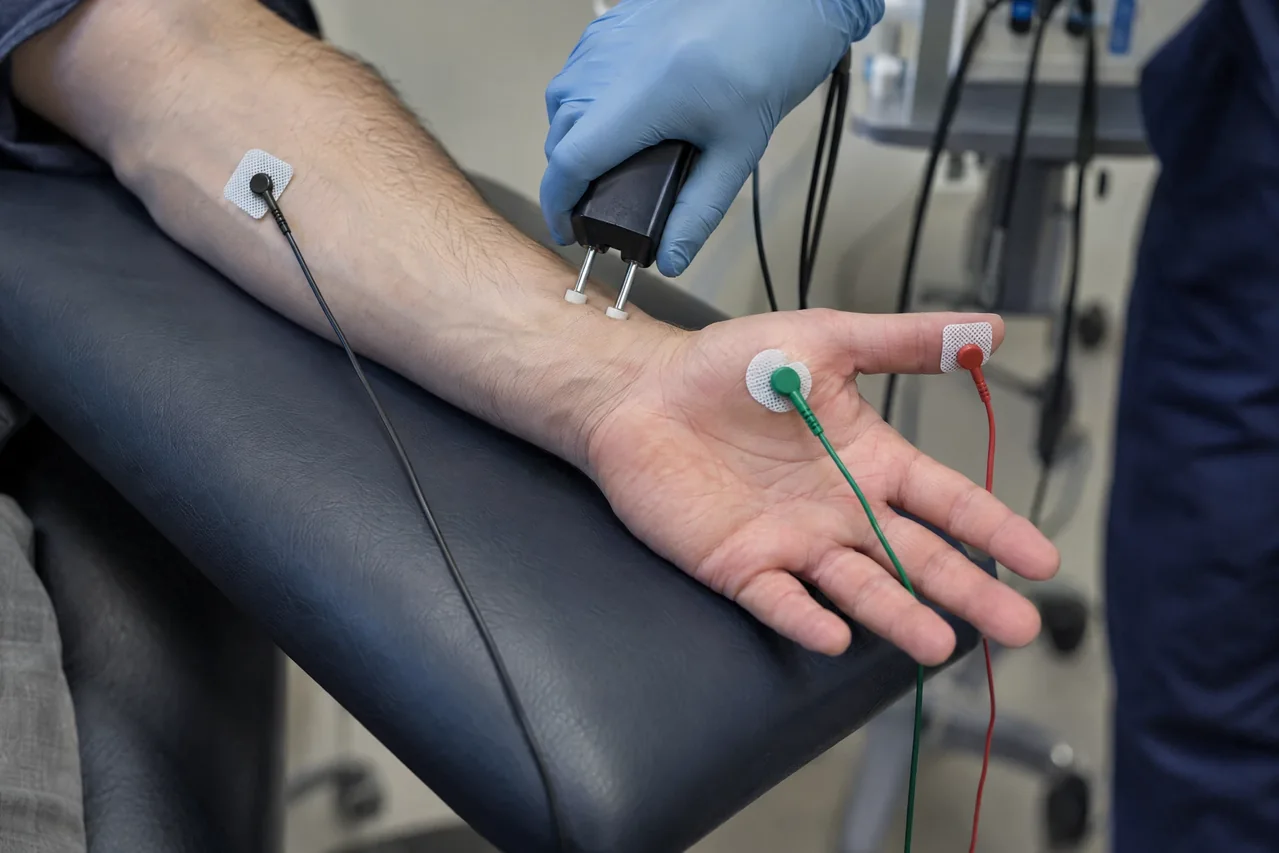
EEG characterizes scalp-recorded cerebral bioelectrical activity. NCS evaluates electrically evoked sensory and motor responses along selected peripheral nerves. Needle EMG assesses skeletal-muscle electrical activity and motor-unit behavior and requires appropriately qualified, licensed professional performance within applicable scope.
RNS, F-wave, H-reflex and blink reflex studies examine particular aspects of neuromuscular transmission, late motor responses and reflex circuitry. SSEP, VEP and BAER/ABR characterize neural responses to controlled sensory, visual or auditory stimulation. Study selection is clinical and protocol-dependent.
Technical quality and reproducibility.
Electrode configuration, impedance where relevant, stimulation adequacy, recording bandwidth, signal averaging, temperature, patient state and artifact recognition can materially influence a recording. Method-specific controls and documentation help distinguish physiologic variation from technical effects.
A reproducible waveform is not automatically a clinically normal or abnormal finding. Technical adequacy, suitable reference data, relevant patient characteristics and the limitations of the method must be considered by the interpreting healthcare professional.
Professional arrangements, clearly defined.
This information is intended for physicians, neurology and physical medicine and rehabilitation practices, appropriate specialty practices, clinics and healthcare organizations. Professional inquiries may address intended study categories, technical coordination and the appropriate clinical framework.
The website does not establish independent physician interpretation, medical decision-making, diagnosis, treatment or prescribing by Apex NeuroMetrics. Specific availability, personnel qualifications, performance responsibilities and interpretation arrangements require verification before clinical services are arranged. Do not submit referrals, patient identifiers or medical documentation by general email.