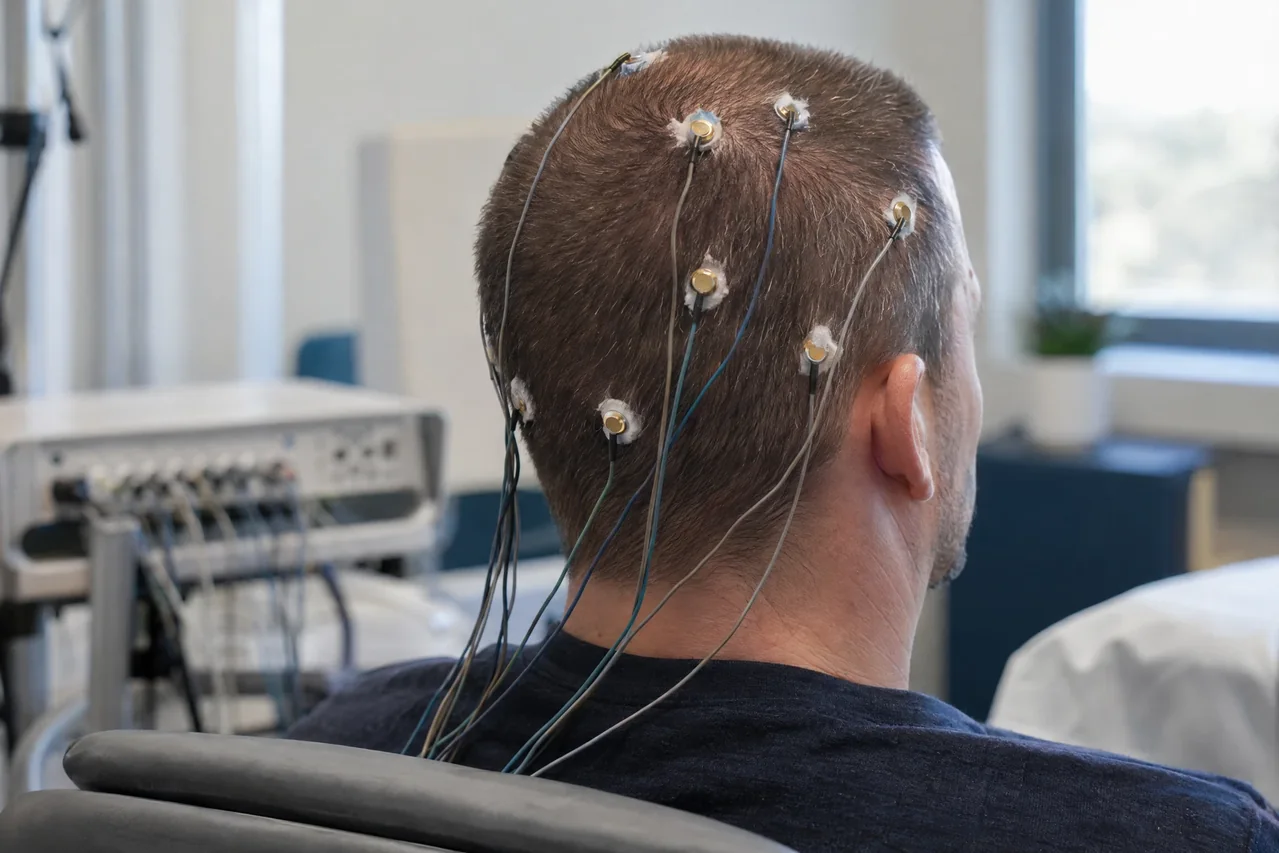
01 / Cerebral electrophysiology
EEG
Characterizing cerebral bioelectrical activity through carefully acquired scalp recordings.
Explore the discipline
Objective electrophysiologic information.
Carefully acquired. Thoughtfully contextualized.
Cerebral, peripheral and neuromuscular assessment—in support of broader clinical evaluation.
Method. Signal quality. Clinical context.
A considered approach to clinical neurophysiology, built around objective information, technical discipline and respect for the individual.
Technical acquisition is distinct from licensed medical interpretation, diagnosis and treatment.
Our professional philosophyDistinct methods. Complementary information. Explore the study before going deeper into its scientific foundations.
View all capabilities
Characterizing cerebral bioelectrical activity through carefully acquired scalp recordings.
Explore the discipline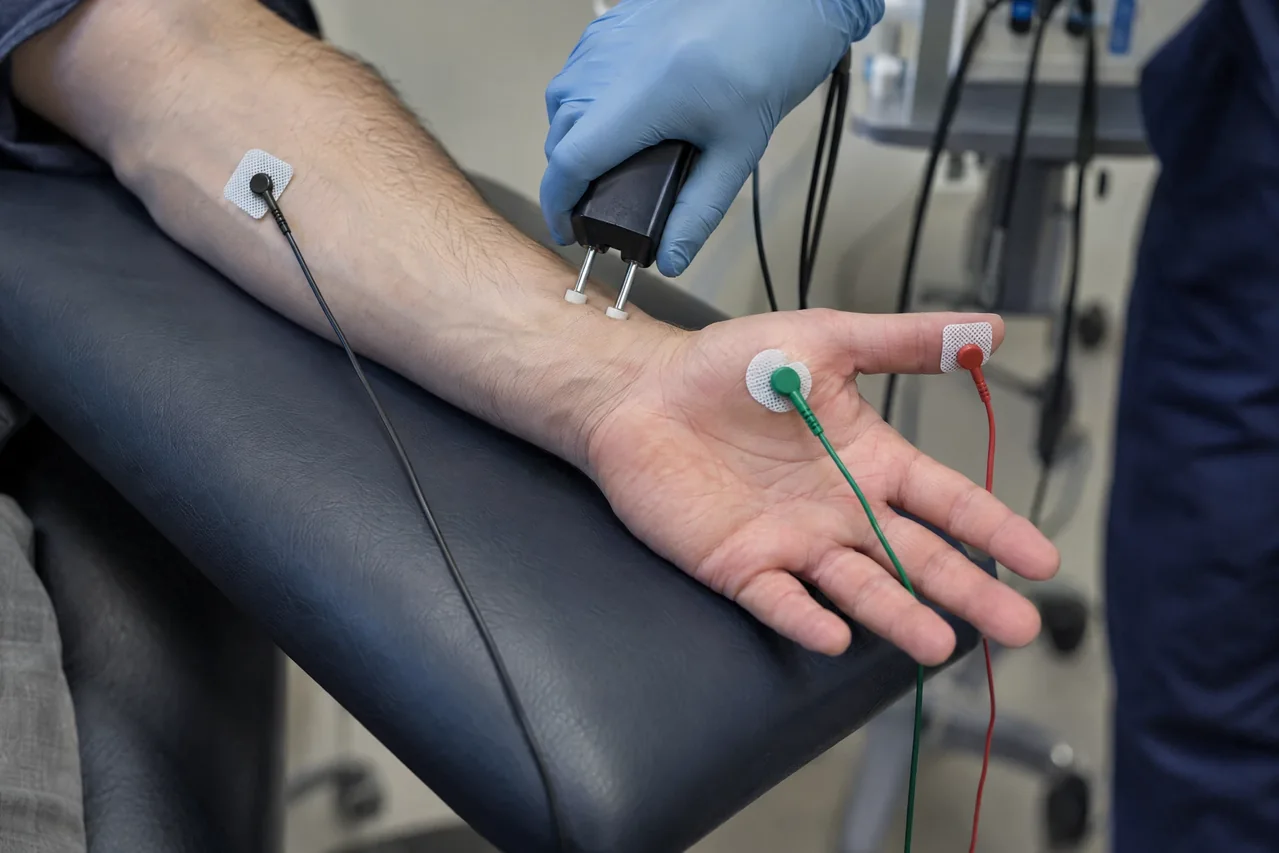
Complementary perspectives on peripheral nerve function, skeletal muscle and motor-unit physiology.
Explore the discipline
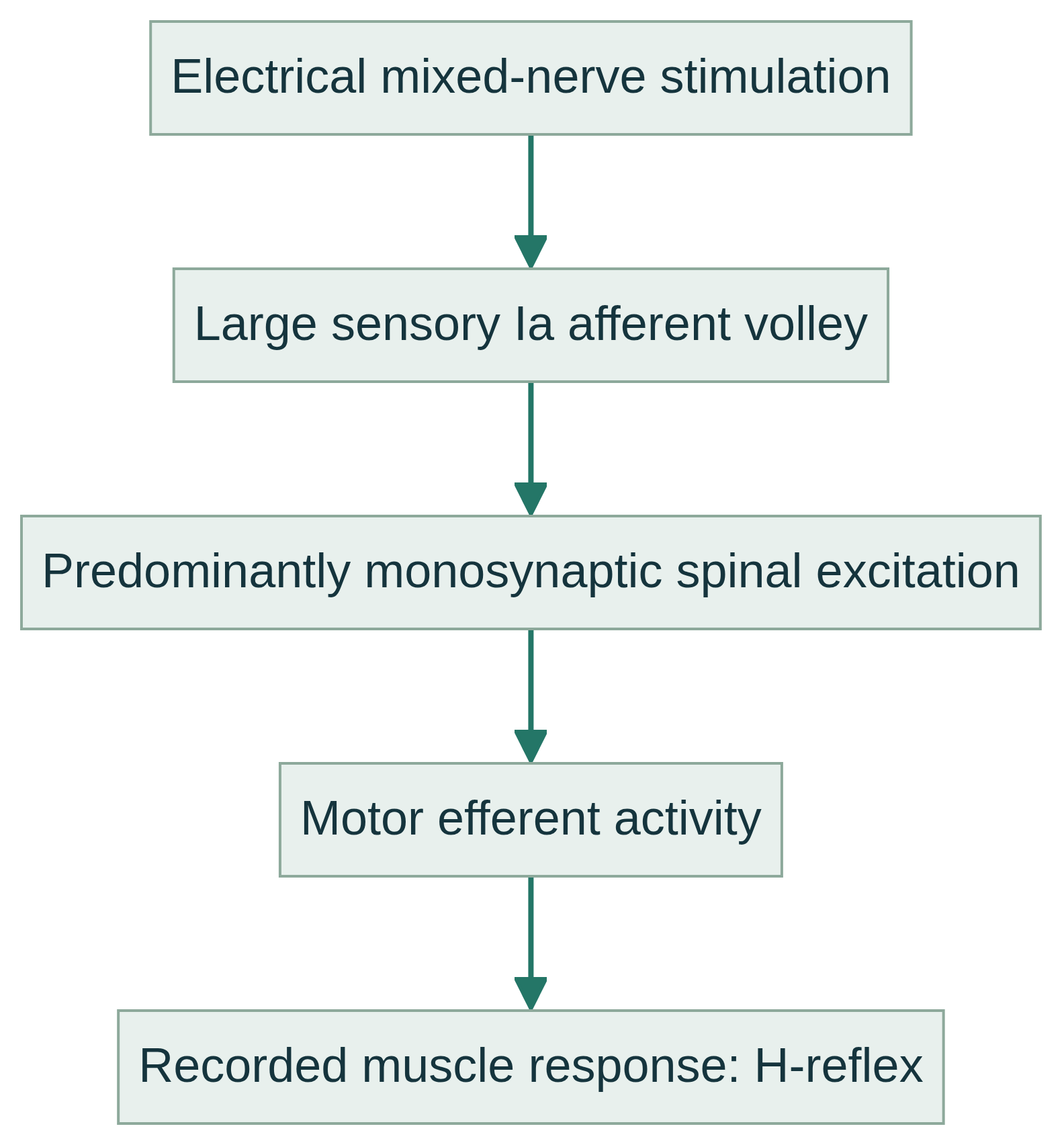
Focused studies of neuromuscular transmission, late motor responses and reflex pathways.
Explore the discipline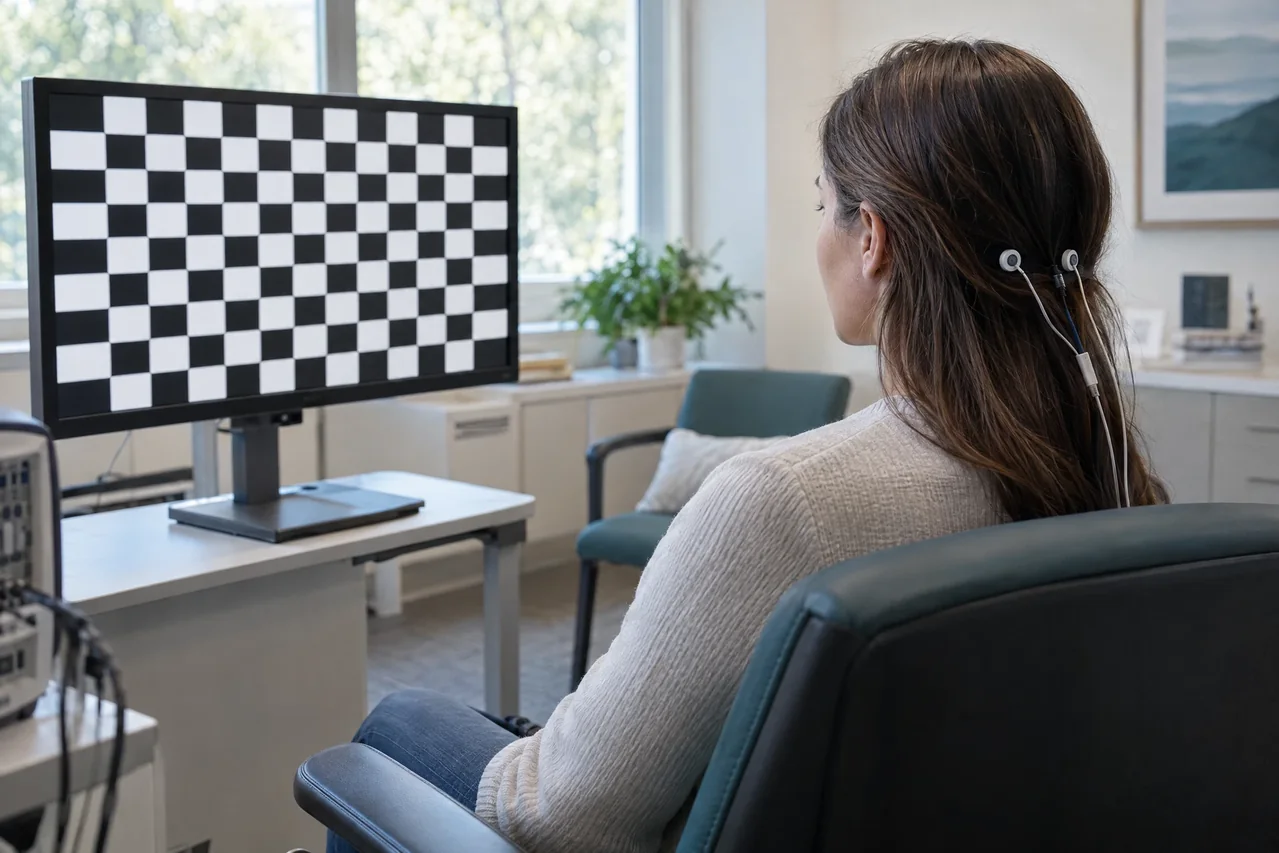
Recording neural responses along somatosensory, visual and auditory pathways.
Explore the disciplineSpecific service availability and clinical arrangements require professional verification.
Our specialized neurophysiology framework
EEG characterizes cerebral bioelectrical activity through carefully acquired scalp recordings.
Understand what a recording evaluates, how signal quality matters and where the findings fit within the referring clinician’s assessment.
A recording supports evaluation. It does not, by itself, establish a diagnosis.
Nerve conduction studies evaluate selected peripheral nerve responses. Needle electromyography offers a different perspective on skeletal muscle and motor-unit physiology.
These methods are complementary, not interchangeable. Their clinical meaning depends on the broader history, examination and evaluation.
Needle EMG requires appropriately qualified licensed professional performance; technical acquisition is not independent medical interpretation.
Neuromuscular transmission, late motor responses and reflex circuitry require different acquisition methods—and careful clinical context.
Explore specialized electrodiagnosticsNo individual waveform or parameter is a standalone diagnosis.
Somatosensory, visual and auditory methods each answer a different physiologic question. Their responses support—not replace—broader clinical assessment.
Explore evoked potentials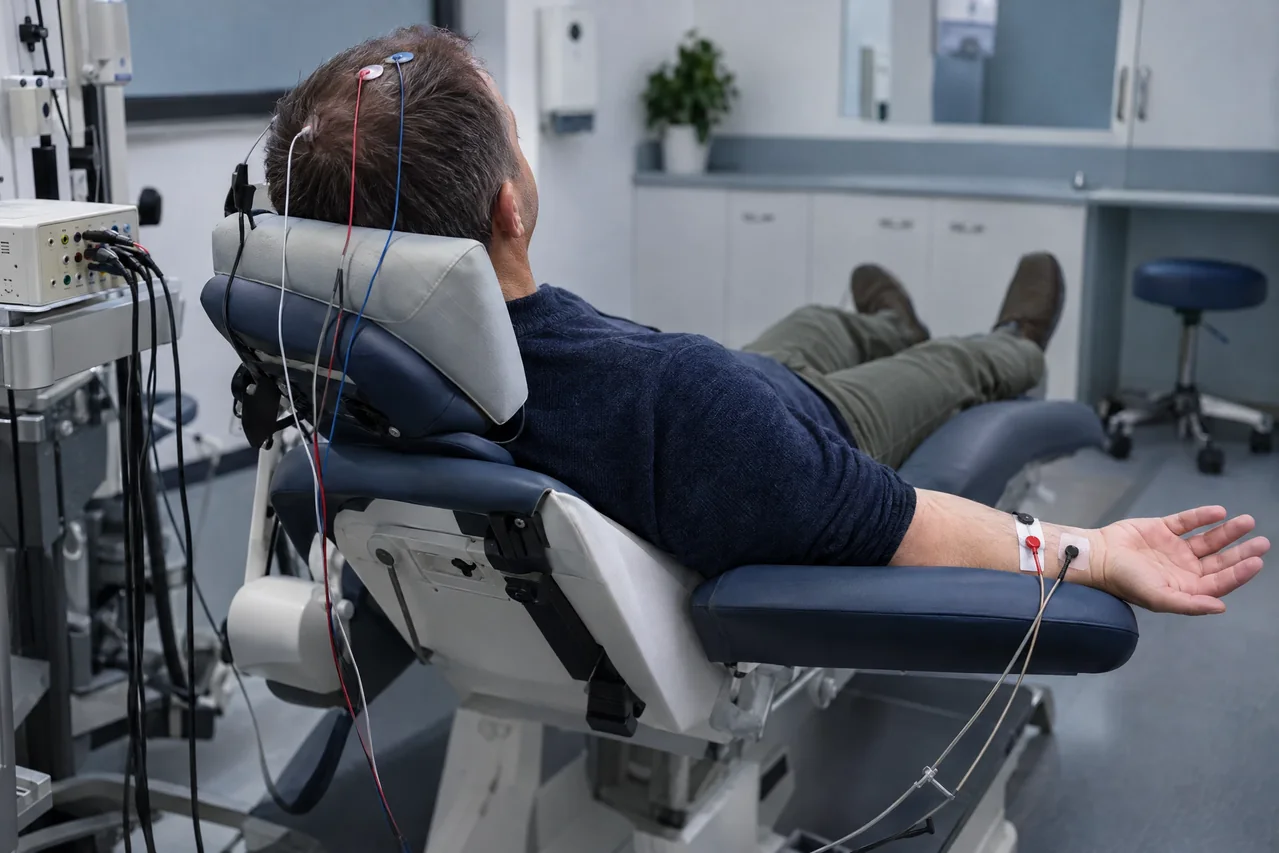
Time-locked responses along selected sensory pathways following peripheral stimulation.
Understand the study
Recorded responses to controlled visual stimulation, with attention to pathway physiology.
Understand the study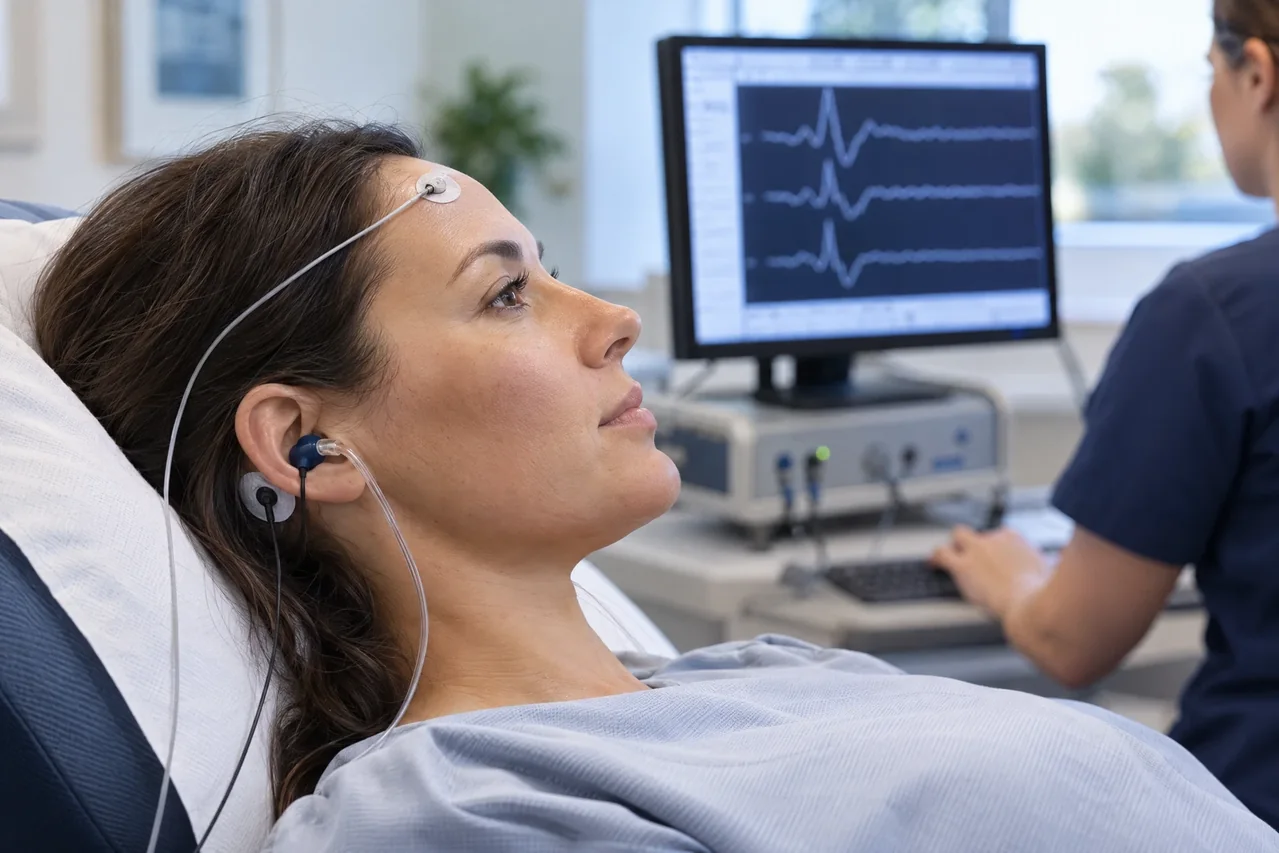
Small, reproducible responses following auditory stimulation, acquired with appropriate averaging.
Understand the studyExplore detailed study principles, acquisition considerations, physiologic parameters and clinical limitations within an appropriately defined professional framework.
Clear explanations of what testing records, how a study generally works and which questions to discuss with your healthcare professional.
Patient informationFrequently asked questionsGeneral education—not individualized advice, scheduling or a patient portal.
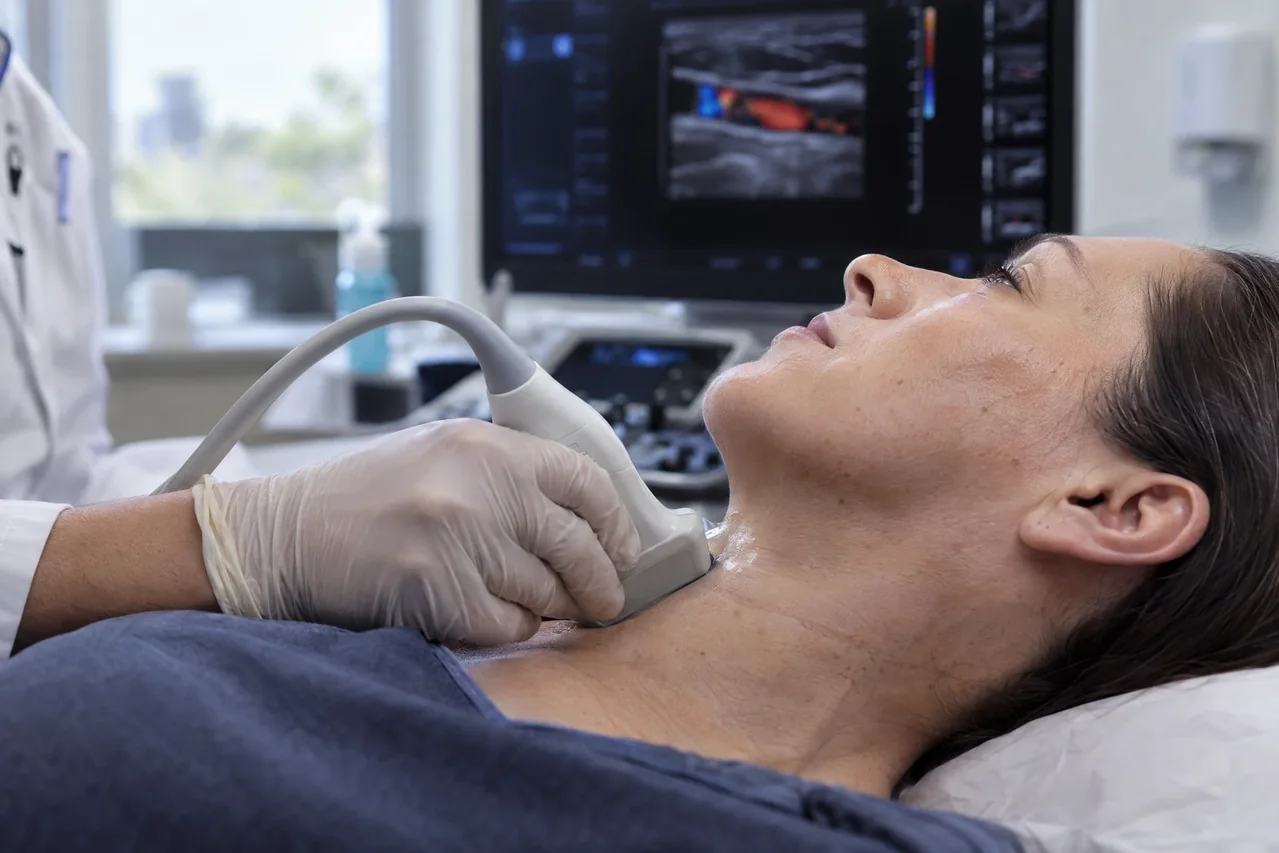
A developing direction in noninvasive vascular ultrasonography, Doppler physiology and appropriate hemodynamic assessment.
Explore developing neurovascular capabilitiesNeurovascular diagnostics are in development. These studies are not currently available.
Your perspective matters. Share your experience of communication, comfort, respect and professionalism during neurodiagnostic testing.
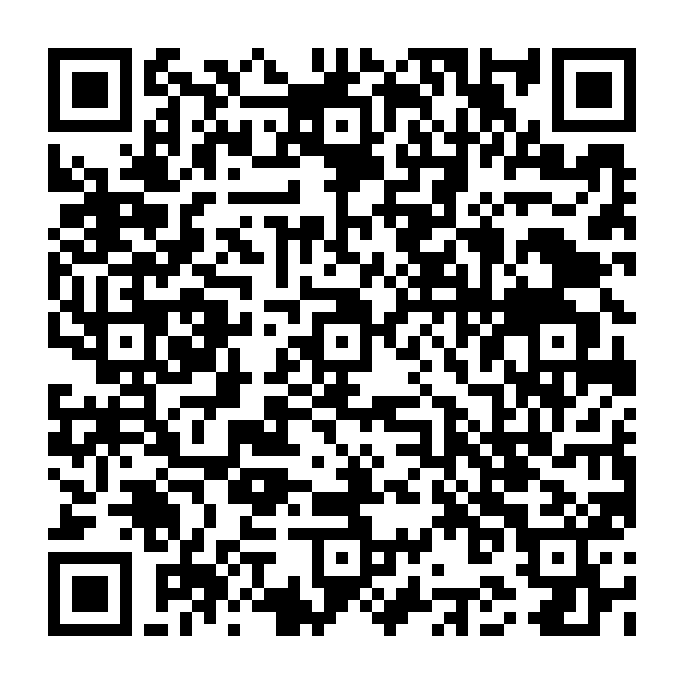
Feedback is voluntary. Use the existing feedback system by following the link below or scanning the original QR code.
Share Your Experience (opens the existing Microsoft Forms feedback system in a new tab)Opens the existing Microsoft Forms feedback system in a new tab. Information you choose to submit is handled there—not collected by a new website form. Review that system’s privacy information before submitting.
Please do not include medical records, diagnoses, test results, medications, insurance information, dates of birth, medical-record numbers, or other sensitive health information in your feedback.
This channel is separate from medical care, clinical communication, referrals, scheduling and patient records. It is not for medical advice, test-result questions or urgent concerns. Use your healthcare team’s established clinical channels; for an emergency, contact local emergency services.
Submitting feedback does not publish it. Public display requires explicit publication approval, permission to share and a privacy review.
No patient feedback is published here yet. Only genuine feedback specifically approved for publication will appear.